
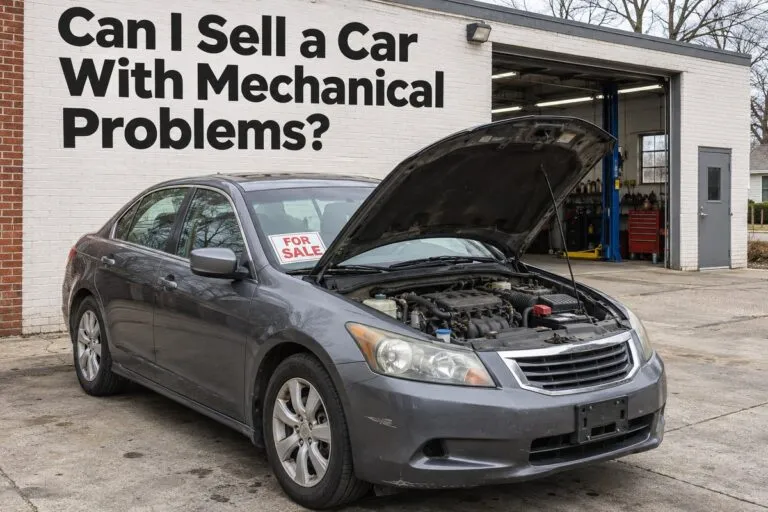
Can I sell a car with mechanical problems? Yes, you can. Many people in Southern California sell cars that will not start, will not shift, or leak fluids. Buyers know that older cars break down.
You do not have to pay for big repairs first. You can sell the car as-is and still get paid. This guide shows your options, what your car may be worth, and the steps to sell it.
Yes, You Can Sell a Car With Mechanical Problems
There is no law that stops you from selling a broken car in California. You just need to follow a few simple rules. Many buyers want cars with problems.
Common Problems Buyers Accept
Most buyers will take a car with issues like these:
- Engine that will not start or runs rough
- Transmission that slips or will not shift
- Blown head gasket or overheating
- Bad brakes or worn suspension
- Check engine light that stays on
- Dead battery, bad alternator, or starter trouble
- Flat tires or a rusted body
- Air conditioning that does not work
Running Cars vs. Non-Running Cars
A car that runs but has problems is worth more. A car that does not run is worth less, but it still has value. Its metal, parts, and catalytic converter can be sold.
How Much Is a Car With Mechanical Problems Worth?
The value depends on the car and the problem. A small issue may only lower the price a little. A big issue like a dead engine lowers it a lot.
What Changes the Price
- Year, make, and model
- Mileage
- Type of problem and repair cost
- Body and interior shape
- Whether the car runs or drives
- Demand for the parts
- Current scrap metal prices
Typical Repair Costs
Repair bills help explain why many owners choose to sell. These are rough estimates. Your costs may be different.
| Problem | Typical Repair Cost |
|---|---|
| Head gasket repair | $1,000 to $2,500 |
| Transmission replacement | $2,500 to $5,000 |
| Engine replacement | $4,000 to $10,000 |
| Catalytic converter replacement | $1,000 to $3,000 |
| Brake job | $300 to $800 |
If the repair costs more than the car is worth, selling as-is often makes the most sense.
What Is a Junk Car Worth?
Junk cars are often priced by weight and by the parts they have. Newer models and popular models usually get higher offers. Cars with a catalytic converter still attached are often worth more too.
Your Options for Selling a Broken Car
You have a few ways to sell. Each one works a bit differently.
Sell to a Junk Car Buyer
This is often the fastest way. Junk car buyers take cars in any shape. Most offer free towing. You get a quote, set a time, and get paid when the car is picked up.
Sell to a Dealer or Private Buyer
Some dealers will buy cars with problems, but they may lower the offer a lot. Private buyers may pay more, but they often want to test drive the car. A car that will not run is hard to sell this way.
Trade It In
You can trade in a car with mechanical problems. The dealer will count the repair cost against you. You may get less than you would from a cash buyer.
Fix It First or Sell As-Is?
Ask yourself two questions:
- Will the repair cost more than the car is worth?
- Will the repair raise the price by more than it costs?
If the answer to the first is yes, sell as-is. Most owners of older cars with big problems do.
California Rules to Know Before You Sell
California has rules for car sales. They are simple when you know them. You can read more on the California DMV website.
Have Your Title Ready
The title is also called the pink slip. You sign it over to the buyer. If you lost it, you can ask the DMV for a replacement.
Smog Check Rules
In California, sellers must often provide a smog certificate. There are some exceptions. For example, cars sold to a licensed dismantler for junking usually do not need one. Ask your buyer before you pay for a smog check.
File a Release of Liability
After the sale, tell the DMV you sold the car. This is called a Release of Liability. You have 5 days to file it. This protects you from tickets and tolls after the car leaves.
Be Honest About the Problems
Tell the buyer what is wrong with the car. Honest sellers avoid fights later. Write “sold as-is” on the bill of sale.
Steps to Sell a Car With Mechanical Problems
Follow these steps for a smooth sale.
Step 1: Gather Your Papers
Find your title, registration, and ID. Have your loan paperwork too if you still owe money.
Step 2: Describe the Problems
Write down what is wrong. Note the mileage, the damage, and whether the car starts. Take clear photos.
Step 3: Get Offers
Ask more than one buyer for a quote. Compare the prices and the pickup terms.
Step 4: Sign and Get Paid
Sign the title and a bill of sale. Make sure you get paid before the car leaves. Remove your license plates if the buyer does not need them.
Step 5: Finish the DMV Paperwork
File your Release of Liability right away. Keep a copy of the bill of sale for your records.
Tips to Get More Money for Your Car
A few small steps can help raise your offer.
Be Ready to Share Details
Buyers like clear facts. Know the year, make, model, mileage, and what is wrong.
Clean Out the Car
Take out your things. A cleaner car looks better and is easier to value.
Keep Good Parts on the Car
Do not remove parts like the battery, wheels, or catalytic converter. Missing parts lower the offer.
Choose a Buyer With Free Towing
Towing can cost $100 or more. A buyer who tows for free saves you money and time.
Quick Answers About Selling a Car With Mechanical Problems
Yes. Many buyers want non-running cars for parts and scrap.
Yes. A car with a blown engine still has value in its parts and metal.
Yes. The light may be a small fix or a big one. Either way, you can sell it as-is.
Yes, but the lender holds the title. You will need to pay off the loan or work out the payoff with your buyer.
No. Fixing it is your choice. Many owners skip repairs and sell as-is.
If you have a car with mechanical problems in Southern California, you do not have to keep it or pay for costly repairs. At sellmycarsocal.com, we buy used and junk cars in any condition. Get a quote, set a pickup time, and get paid for your car.