
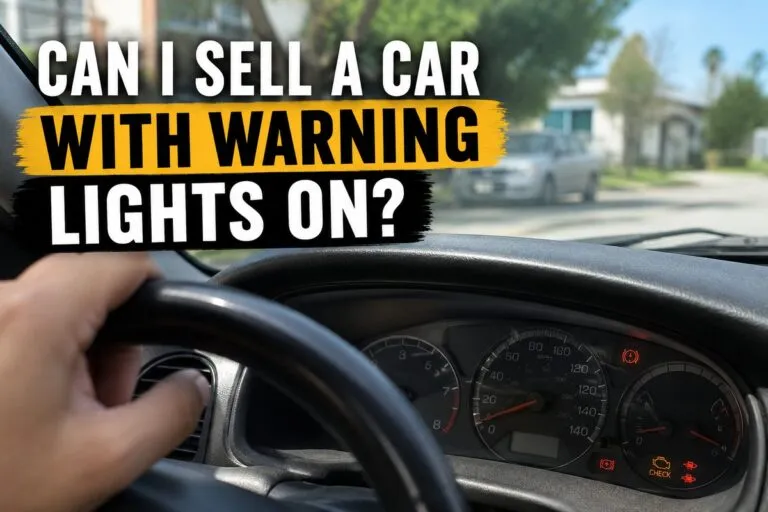
Can I sell a car with warning lights on? Yes, you can sell a used or junk car even when the check engine light, ABS light, airbag light, battery light, oil warning light, or other dashboard warning lights are illuminated. A warning light may affect the car’s value and make it more difficult to sell to a private buyer, but it does not automatically prevent you from selling the vehicle.
For car owners in Southern California, the bigger question is often whether it makes sense to repair the problem before selling. Depending on the vehicle’s age, condition, mileage, and the reason for the warning light, spending money on repairs may not provide enough additional resale value to justify the cost.
Can You Legally Sell a Car With Warning Lights On?
In general, having warning lights illuminated does not automatically make a vehicle impossible to sell. Cars are sold every day with mechanical problems, electrical issues, accident damage, and dashboard warning lights.
The important part is being accurate about the condition of the vehicle. If you know that the car has a mechanical or safety-related problem, you should not intentionally misrepresent its condition to a potential buyer.
The type of sale can also make a difference. Selling a car privately may involve different expectations and responsibilities than selling directly to a company that buys used cars, damaged cars, and junk cars.
California sellers should also pay attention to applicable DMV requirements and emissions requirements when transferring a vehicle.
What Warning Lights Can Affect the Sale of a Used Car?
Almost any warning light can influence what a buyer is willing to pay. Some lights indicate relatively minor problems, while others can suggest expensive repairs.
Common dashboard warning lights that may appear when selling a used car include:
- Check engine light
- ABS warning light
- Airbag or SRS light
- Battery or charging system light
- Oil pressure warning light
- Brake warning light
- Tire pressure monitoring system light
- Transmission warning light
- Traction control light
- Coolant temperature warning light
A buyer may treat each warning differently. A tire pressure light may be less concerning than an oil pressure or transmission warning, for example.
When several dashboard warning lights are illuminated at the same time, buyers may assume the vehicle needs substantial mechanical or electrical work. That can make a private sale considerably more difficult.
Selling a Car With the Check Engine Light On
The check engine light is one of the most common concerns for people trying to sell a used car.
A check engine light can appear for many reasons. The underlying issue could be relatively inexpensive, or it could indicate a problem involving the engine, emissions system, fuel system, sensors, catalytic converter, or other components.
Should You Diagnose the Check Engine Light Before Selling?
Getting the diagnostic trouble codes read can give you a better understanding of what may be happening. However, a trouble code does not always identify the exact component that needs to be replaced.
For example, a code related to emissions or engine performance may require additional diagnosis before the true repair cost is known.
Knowing the code can still be useful because it helps you compare two options:
- Repair the vehicle and then sell it.
- Sell the car with the check engine light on and avoid additional repair expenses.
If the car is older, has high mileage, or already has several mechanical problems, selling it as-is may make more financial sense.
Can I Sell a Car That Won’t Pass Smog?
This is an especially important question when selling a car in Southern California.
An illuminated check engine light can prevent a vehicle from passing a California Smog Check because the vehicle’s onboard diagnostic system may detect an emissions-related problem.
California has specific requirements concerning Smog Check certification during many private-party vehicle sales. Sellers should verify the requirements that apply to their specific vehicle and transaction before completing a sale.
If your car has a check engine light and you are concerned that it will not pass smog, consider the total cost of getting it ready for testing. Repairs involving emissions equipment, catalytic converters, sensors, or engine problems can become expensive.
For an older vehicle with limited resale value, putting significant money into repairs solely to prepare it for sale may not be worthwhile.
Should I Fix Warning Lights Before Selling My Car?
Not necessarily.
Before paying for repairs, compare the estimated repair cost against the amount the repair is likely to add to the car’s selling price.
Suppose a vehicle could sell for $3,000 in its current condition but needs $1,500 in repairs. If completing those repairs only increases its realistic selling price to $3,800, spending $1,500 to gain $800 in value would not make financial sense.
Repairs May Make Sense When the Problem Is Minor
Fixing a warning light can be worthwhile when the problem is inexpensive and significantly improves the car’s appeal.
Examples might include a straightforward sensor replacement, weak battery, or another relatively affordable repair that can be properly diagnosed and corrected.
The calculation changes when the car needs major repairs.
Selling the car as-is may be more practical when you are dealing with:
- Major engine problems
- Transmission issues
- Catalytic converter problems
- Multiple warning lights
- Electrical problems
- ABS or braking system problems
- Airbag system faults
- Overheating
- High repair estimates
- An older high-mileage vehicle with limited resale value
Getting an estimate before authorizing expensive repairs can help you determine whether fixing the vehicle is actually worth it.
How Warning Lights Affect Your Car’s Value
Warning lights typically lower the amount buyers are willing to pay because they introduce uncertainty.
A buyer does not only consider the cost of the known repair. They also consider the possibility that the diagnostic process could uncover additional problems.
The amount a warning light affects your car’s value depends on several factors, including:
- Vehicle year, make, and model
- Mileage
- Overall mechanical condition
- Exterior and interior condition
- Type of warning light
- Diagnostic trouble codes
- Estimated repair cost
- Whether the car runs and drives
- Accident or structural damage
- Current demand for the vehicle
A newer vehicle in otherwise excellent condition may still retain substantial value with a warning light on. An older car with 200,000 miles, body damage, transmission problems, and several warning lights will usually be valued very differently.
Selling a Car With Multiple Dashboard Warning Lights
Multiple warning lights can make selling to a private buyer challenging.
Sometimes several lights are related to one underlying problem. In other situations, they represent separate mechanical, electrical, or safety issues.
For example, a vehicle might simultaneously display the check engine, ABS, traction control, and tire pressure lights. Even if the vehicle still runs, a private buyer may be concerned about the cost of diagnosing every issue.
You do not necessarily have to repair every problem before selling the car. A buyer who purchases used, damaged, or junk vehicles may be willing to evaluate the car based on its overall condition instead.
Can I Sell a Car With the ABS or Brake Light On?
You can potentially sell a vehicle with an ABS or brake warning light illuminated, but these warnings deserve particular attention because they can indicate problems with braking or stability systems.
A brake-related warning should not simply be ignored because the car appears to drive normally.
Possible causes can range from sensor or electrical issues to problems requiring more substantial repairs. If you do not know what caused the warning, avoid making assumptions about the vehicle’s safety or telling a buyer that the problem is minor.
If repairing the braking system would cost more than you want to invest in the vehicle, selling the car in its current condition may be an alternative.
Can I Sell a Car With the Airbag Light On?
An illuminated airbag or SRS warning light may indicate a problem with the supplemental restraint system.
Private buyers can be especially hesitant about airbag warning lights because diagnosis and repairs may involve sensors, wiring, seat components, control modules, or other parts of the restraint system.
If the car has also been in an accident, buyers may have additional concerns about the condition of the airbags and related safety equipment.
For a damaged or older vehicle, it can make sense to obtain an as-is offer before paying for airbag system repairs.
Can I Sell a Car With Engine or Transmission Problems?
A car does not have to be mechanically perfect to have value.
Vehicles with engine or transmission problems may still be purchased for their usable components, rebuild potential, resale potential, or salvage value.
You may still be able to sell a car that has:
- A check engine light
- Rough running or misfires
- Oil leaks
- Transmission warning lights
- Hard or delayed shifting
- Overheating problems
- Reduced engine power
- A no-start condition
- Major mechanical damage
The severity of the problem will affect the offer, but mechanical problems do not automatically make a car worthless.
Is It Better to Sell Privately or Sell the Car As-Is?
Private sales can sometimes produce a higher selling price, particularly when a vehicle is in good condition. Warning lights can make that process more complicated.
A private buyer may want diagnostic reports, repair estimates, inspections, test drives, and price negotiations before agreeing to purchase the vehicle.
You may also spend money trying to make the car more marketable before finding a buyer.
Selling a used or junk car as-is can be more practical when the vehicle has expensive problems or you simply do not want to invest additional money into it.
An As-Is Sale May Make Sense If:
- The repair costs are close to the car’s value.
- The vehicle has multiple mechanical problems.
- The check engine light keeps returning.
- The car has very high mileage.
- The vehicle has accident or body damage.
- You do not want to pay for additional diagnostics.
- The vehicle no longer runs.
- You want to sell a junk car without repairing it first.
The right choice depends on how much the car is worth in its current condition compared with its potential value after repairs.
Should I Clear the Warning Lights Before Selling?
Clearing diagnostic codes is not the same as repairing the underlying problem.
Disconnecting the battery or using a scan tool may temporarily turn off certain warning lights, but the light can return once the vehicle’s computer detects the problem again.
It can also reset emissions readiness monitors, which may create additional issues when the vehicle needs an emissions inspection.
If you are selling a car with warning lights, focus on the actual condition of the vehicle rather than trying to temporarily hide the dashboard lights.
Being straightforward about known problems helps prevent misunderstandings with potential buyers.
What Information Should I Have Before Selling?
You do not necessarily need to pay for extensive diagnostics before requesting an offer for a used or junk car. However, providing accurate information can make the valuation process easier.
Useful information includes:
- Year, make, and model
- Approximate mileage
- Whether the vehicle starts
- Whether it currently runs and drives
- Which warning lights are illuminated
- Known mechanical problems
- Accident or body damage
- Missing or damaged components
- Recent repair estimates, if available
- Title status
If you already have diagnostic codes or a mechanic’s estimate, that information may also be useful. You should not feel obligated to authorize expensive repairs simply because you had the vehicle diagnosed.
When Selling Without Repairs Makes More Sense
There is a point where continuing to repair an older vehicle stops being financially practical.
Imagine your car has a check engine light, needs a catalytic converter, has 180,000 miles, and also has cosmetic damage. Even if each individual problem can be repaired, the combined cost may represent a large percentage of the vehicle’s total market value.
Selling without repairs may be the better option when the cost of fixing the car is unlikely to be recovered through a higher selling price.
This is particularly relevant for junk cars, high-mileage vehicles, damaged cars, non-running cars, and vehicles with recurring mechanical problems.
Selling a Used or Junk Car With Warning Lights in Southern California
If you have a car with warning lights on in Southern California, you do not necessarily have to repair every problem before trying to sell it.
Sell My Car SoCal buys used and junk cars in a wide range of conditions. That can include vehicles with check engine lights, mechanical problems, accident damage, high mileage, or other issues that make a traditional private sale more difficult.
Before spending hundreds or thousands of dollars trying to eliminate dashboard warning lights, compare the repair costs with what the vehicle is realistically worth. An as-is offer can give you another number to consider before deciding whether repairs are worthwhile.
A warning light does not automatically mean your car has no value. Whether you are dealing with a check engine light, ABS warning, airbag light, transmission problem, or multiple dashboard warnings, you may still be able to sell your used or junk car without completing expensive repairs first.
For many Southern California car owners, the best decision comes down to simple math: determine what the vehicle is worth as-is, estimate what repairs will actually cost, and consider how much those repairs would increase the selling price. If the numbers do not justify fixing the car, selling it in its current condition can save you the cost, time, and uncertainty of repairing a vehicle you already plan to sell.
Content reviewed and published by Sell My Car SoCal Editorial Team .