
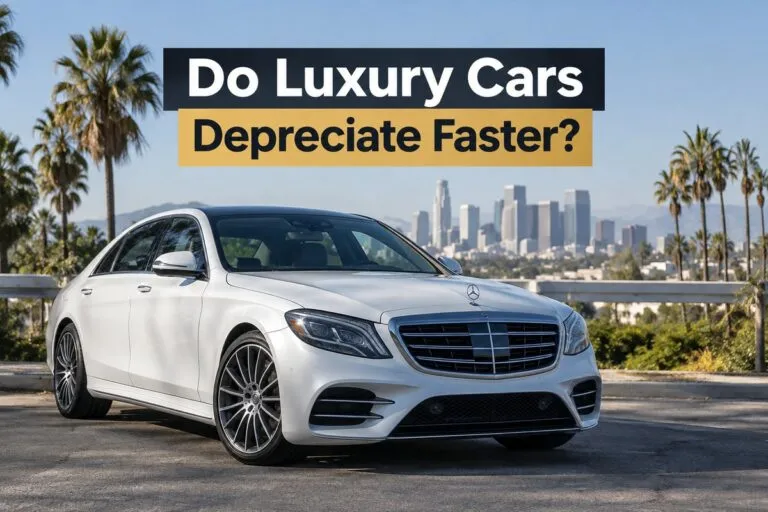
Do luxury cars depreciate faster? In many cases, yes. Luxury vehicles can lose value more quickly than mainstream cars, especially during the first several years of ownership. High original prices, expensive repairs, rapidly changing technology, and a smaller pool of used-car buyers can all contribute to faster luxury car depreciation.
That does not mean every luxury vehicle loses value at the same rate. Brand reputation, mileage, condition, maintenance history, model popularity, age, and local demand can significantly affect how much a used luxury car is worth. For Southern California owners thinking about selling a luxury vehicle, understanding these factors can help explain why the current market value may be considerably different from the original purchase price.
Why Do Luxury Cars Depreciate Faster?
A new luxury vehicle often comes with premium materials, advanced technology, powerful engines, and features that help justify a high initial price. Unfortunately, many of those features do not maintain their original value as the vehicle gets older.
Depreciation begins as soon as a new vehicle becomes used. With an expensive luxury car, even a similar percentage decrease in value can represent thousands of dollars more in actual depreciation compared with an economy car.
Several factors can accelerate depreciation:
- High initial purchase prices create more room for the vehicle’s dollar value to fall.
- Used-car shoppers may be unwilling to pay large premiums for features that were expensive when new.
- Repairs and replacement parts can be considerably more expensive.
- Factory warranty expiration can make older luxury vehicles less attractive.
- New technology can make older infotainment and safety systems feel outdated.
- Luxury vehicles often compete against attractive lease returns and certified pre-owned vehicles.
- Certain models have a relatively small used-car buyer pool.
The combination of these factors can result in substantial depreciation, particularly for luxury sedans and vehicles with complicated or expensive-to-maintain components.
The Original Price Can Make Depreciation Look More Dramatic
One reason luxury vehicle depreciation attracts so much attention is the difference between the original MSRP and the vehicle’s eventual used-car value.
Consider a luxury vehicle that originally sold for $80,000 and a mainstream vehicle that sold for $30,000. If both lose a significant percentage of their value, the luxury vehicle owner experiences a much larger loss in actual dollars.
Optional equipment can make the difference even larger. A buyer might spend thousands of dollars on upgraded leather, premium wheels, entertainment packages, special paint, performance options, or technology packages when purchasing the vehicle new.
Those options do not necessarily add the same amount to the vehicle’s resale value several years later. A $5,000 option when new, for example, does not automatically make the vehicle worth $5,000 more on the used-car market.
Luxury Car Depreciation Is Often Highest During the Early Years
Luxury cars can experience some of their most noticeable depreciation while they are relatively new. The first owner paid a premium for a brand-new vehicle, the latest styling, current technology, factory warranty coverage, and the ability to select the exact specifications.
A secondhand buyer approaches the same vehicle differently. Used luxury car shoppers tend to focus more heavily on mileage, maintenance history, remaining warranty coverage, expected repair costs, and comparable vehicles available for sale.
Coming Off Lease Can Affect Used Luxury Car Values
Leasing is common in the luxury vehicle market. When large numbers of similar vehicles reach the used market after their leases end, buyers may have many comparable cars to choose from.
That additional supply can put pressure on resale values for certain models, especially when dealerships have multiple similar vehicles with comparable mileage and equipment.
A private seller may also be competing with certified pre-owned vehicles that include dealership inspections, financing options, or warranty coverage. That competition can influence what an individual buyer is willing to pay for a privately owned luxury car.
Expensive Repairs Can Reduce the Value of Older Luxury Cars
Repair costs become increasingly important as a luxury vehicle ages. A sophisticated suspension system, turbocharged engine, advanced electronics, premium lighting system, or complicated climate-control system can be attractive when everything works properly.
Once problems appear, those same components can become expensive to repair.
Potential buyers may consider the cost of:
- Air suspension repairs
- Turbocharger or supercharger problems
- Electronic control modules
- Adaptive headlights
- Premium infotainment systems
- Advanced driver-assistance sensors
- High-performance brakes
- Large wheels and performance tires
- Power accessories and luxury interior components
- Engine or transmission repairs
An older luxury vehicle with several warning lights or mechanical problems may therefore be worth substantially less than an equivalent vehicle that has been carefully maintained.
Maintenance History Can Have a Major Effect on Resale Value
Maintenance records are particularly valuable when selling a used luxury car. Buyers know that neglected maintenance on a sophisticated vehicle can lead to expensive problems later.
A vehicle with documented oil changes, scheduled services, recent repairs, and properly maintained major components may be more desirable than an identical vehicle without records.
Deferred Maintenance Can Quickly Hurt the Selling Price
Skipping maintenance does not necessarily cause an immediate breakdown, but accumulated problems can make a luxury vehicle difficult to sell.
For example, imagine a luxury car that needs tires, brakes, suspension work, and a major scheduled service. Individually, each item may be manageable. Combined, they can represent thousands of dollars in potential expenses for the next owner.
A buyer or car-buying company will generally account for those necessary repairs when determining the vehicle’s value.
Technology Can Age Faster Than the Rest of the Car
Luxury manufacturers frequently introduce new technology before similar features become common in mainstream vehicles. That can make a new luxury car impressive, but technology can also become outdated quickly.
An older navigation system that once seemed advanced may be less useful than a modern smartphone. Early infotainment systems can feel slow compared with newer interfaces. Cameras may have lower resolution, screens may be smaller, and older connectivity features may not support current devices as smoothly.
Newer versions of the same vehicle may offer significantly improved:
- Touchscreens and infotainment systems
- Smartphone integration
- Parking cameras
- Driver-assistance technology
- Digital instrument displays
- Navigation
- Audio systems
- Connectivity features
As newer vehicles gain these improvements, buyers may be less willing to pay a premium for older technology.
Do All Luxury Cars Depreciate at the Same Rate?
No. Depreciation can vary considerably between luxury brands, vehicle types, models, trim levels, and even individual vehicles.
Some luxury SUVs, sports cars, specialty models, and desirable configurations can maintain stronger resale demand. Other vehicles, particularly luxury sedans with high mileage or expensive maintenance requirements, may experience steeper declines.
Brand and Model Demand Matter
Used-car values ultimately depend heavily on what buyers want. A luxury model with a strong reputation for reliability and a large following may have better resale demand than a model known for costly repairs.
Brand recognition can help, but the specific model is important. Two vehicles carrying the same luxury badge can have very different resale values.
SUVs May Perform Differently From Luxury Sedans
Vehicle type can influence depreciation as consumer preferences change. Luxury SUVs and crossovers can attract a broad range of used-car shoppers because of their cargo capacity, seating position, and everyday practicality.
Certain luxury sedans may have a narrower audience. If fewer shoppers are looking for that type of vehicle, sellers can face more competition for each interested buyer.
Performance and Specialty Cars Can Be Different
Some performance-oriented or limited-production luxury vehicles do not follow typical depreciation patterns. Desirable engines, rare specifications, manual transmissions on certain models, limited production numbers, or enthusiast demand can help some vehicles retain value.
However, rarity alone does not guarantee a high resale price. There still needs to be sufficient buyer demand for that particular vehicle.
Mileage Has a Significant Impact on Luxury Car Value
Mileage affects almost every used vehicle, but it can become particularly important with luxury cars because buyers may associate higher mileage with upcoming repair expenses.
A luxury vehicle with 40,000 miles can appeal to a different group of buyers than the same vehicle with 140,000 miles.
Higher mileage may mean more wear on:
- Suspension components
- Engine accessories
- Transmission components
- Interior materials
- Seats and electronics
- Brakes and tires
- Cooling-system components
Mileage does not automatically make a luxury car undesirable. A high-mileage vehicle with excellent maintenance can still have value. However, buyers generally consider both mileage and condition when making an offer.
Condition Can Matter as Much as the Badge on the Hood
A luxury brand name cannot compensate for serious vehicle damage. Once a luxury car becomes older, its physical and mechanical condition can have a major influence on its resale value.
Body damage, faded paint, torn upholstery, warning lights, mechanical problems, missing parts, or accident damage can all lower the amount someone is willing to pay.
This becomes especially relevant for owners trying to sell a junk luxury car. A vehicle may have originally cost a substantial amount, but its current value is based on its present condition, usable components, market demand, and other factors rather than its original MSRP.
Accident History Can Increase Luxury Vehicle Depreciation
An accident can affect the resale value of almost any vehicle. Luxury cars can be particularly sensitive because buyers paying a premium for a used vehicle may expect excellent condition and a clean history.
The severity of the accident matters. Minor cosmetic repairs are different from major structural damage, airbag deployment, flood damage, or a salvage title.
When evaluating an accident-damaged luxury car, buyers may consider:
- Whether the vehicle has a clean, rebuilt, or salvage title
- The extent of structural damage
- Whether airbags deployed
- Quality of previous repairs
- Current mechanical condition
- Whether replacement parts are readily available
- Current mileage and age
A luxury vehicle with substantial accident damage can still have value, even if repairing it for a traditional private-party sale no longer makes financial sense.
When Repair Costs Start Exceeding the Car’s Practical Value
One of the biggest decisions facing owners of older luxury vehicles is whether another major repair is worth paying for.
Suppose a vehicle needs several thousand dollars of engine, transmission, suspension, or electrical work. Spending that money may make sense if the car has a strong market value and is otherwise in excellent condition.
It becomes harder to justify when the vehicle already has high mileage, cosmetic damage, additional mechanical problems, or a low resale value.
Compare the Repair Bill With the Car’s Current Value
Before authorizing a major repair, compare the estimated cost with the vehicle’s realistic current value in its present condition and its expected value after the repair.
Important questions include:
- How much is the vehicle worth right now?
- What could it realistically sell for after repairs?
- Are additional repairs likely soon?
- Does the vehicle have accident or title issues?
- How much would towing or transportation cost?
- Is there sufficient demand for the vehicle locally?
Owners sometimes focus on how much they originally paid for a luxury car. That amount is no longer the most useful number when deciding whether to repair or sell it. The current market value and expected repair costs provide more relevant information.
Selling a High-Mileage Luxury Car
Selling a high-mileage luxury vehicle privately can take time. Many individual buyers shopping for premium vehicles specifically look for lower-mileage examples with service records and few mechanical issues.
That does not mean a high-mileage luxury car has no market.
Be realistic about its condition and gather useful information before requesting an offer. Knowing the exact mileage, year, make, model, title status, accident history, mechanical problems, and overall condition can make the selling process easier.
If the car still runs, mention any major recent maintenance. If it does not run, provide accurate information about the known problem rather than assuming the vehicle has no value.
Selling a Junk Luxury Car in Southern California
Luxury car depreciation becomes particularly important when an older vehicle develops major mechanical problems or accident damage. A car that was once expensive can eventually reach a point where traditional resale is difficult.
For owners in Southern California, selling the vehicle as-is can be an alternative to spending money on repairs before a sale.
A junk luxury car may still have value based on factors such as:
- Make and model
- Vehicle age
- Mileage
- Overall condition
- Engine and transmission condition
- Accident damage
- Title status
- Demand for usable parts
- Current local market demand
Vehicles do not necessarily need to be in excellent condition to be sold. Non-running cars, damaged luxury vehicles, high-mileage cars, and vehicles needing expensive repairs may still receive offers.
How to Get a Better Idea of What Your Luxury Car Is Worth
Before selling, collect accurate information about your vehicle. The more precise the information, the easier it is to evaluate its current value.
Start with the year, make, model, trim, mileage, and VIN. Then note any mechanical problems, warning lights, body damage, missing components, accident history, or title issues.
You should also consider recent maintenance. New tires, recent brakes, a replacement battery, major engine work, or other documented repairs can provide useful information about the car’s current condition.
Avoid assuming that the original luxury-car price determines today’s value. Used luxury car values are influenced by current demand, depreciation, mileage, condition, maintenance history, and the cost of any repairs the next owner may need to make.
Should You Sell an Older Luxury Car Instead of Repairing It?
The answer depends on the numbers. An older luxury vehicle that needs a minor repair may be worth fixing. A high-mileage car requiring several major repairs can present a very different situation.
Get a repair estimate and compare it with the vehicle’s current resale value. Consider whether other expensive maintenance items are approaching as well.
If the cost of getting the vehicle into desirable selling condition is too high, selling the luxury car as-is may avoid putting additional money into a depreciating vehicle.
Do luxury cars depreciate faster? Many do, particularly when high initial prices, expensive repairs, aging technology, warranty expiration, and changing used-car demand come together. The amount of depreciation, however, depends heavily on the specific vehicle and its condition.
If you have a used, high-mileage, damaged, non-running, or junk luxury car in Southern California, its original purchase price may be far less important than what the vehicle is worth today. Understanding its mileage, condition, repair needs, title status, and current market demand can help you decide whether another repair makes sense or whether it is time to sell the car as-is.
Content reviewed and published by Sell My Car SoCal Editorial Team .