
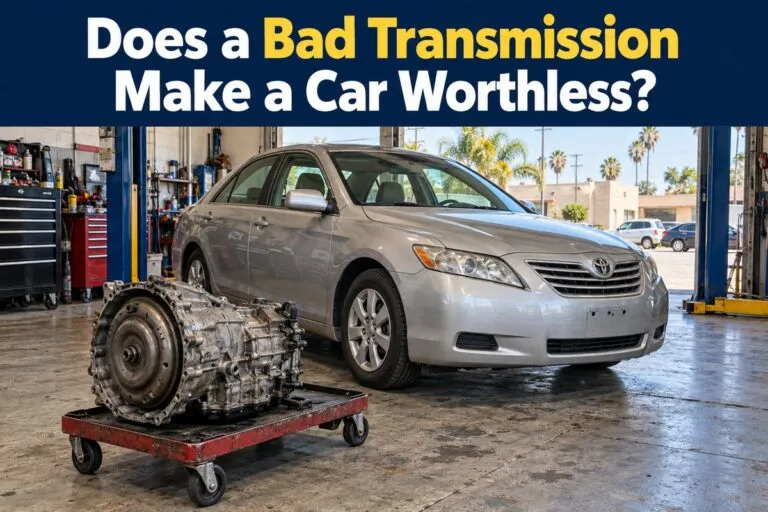
Does a Bad Transmission Make a Car Worthless?
Does a bad transmission make a car worthless? No. A damaged transmission can significantly reduce your car’s resale value, but it does not automatically erase what the vehicle is worth. Even a car that cannot move may still have value as a repair project, a source of usable parts, or a vehicle for recycling.
For Southern California owners looking to sell a used or junk car, the question is how much value remains and whether repairs would actually put more money in your pocket. Understanding those numbers can help you avoid an unnecessary repair bill or accepting an offer that is too low.
Why a Car With a Bad Transmission Still Has Value
A transmission problem affects one major part of the vehicle. It does not necessarily mean the engine, body, interior, and other components have reached the end of their useful lives.
Different buyers also evaluate the same car differently. Someone seeking reliable daily transportation may pass immediately, while a repair business or auto dismantler may see a worthwhile purchase.
The Rest of the Vehicle Matters
A car with a healthy engine, clean interior, and undamaged body may attract more interest than an otherwise identical vehicle with several major problems.
Parts that can contribute to its remaining value include:
- A working engine and compatible engine components.
- Straight body panels, doors, and bumpers.
- Undamaged headlights, taillights, and glass.
- Usable wheels and tires.
- Interior components and electronics.
These parts do not guarantee a particular offer. Their condition, compatibility, and demand affect what a buyer can realistically recover.
Repair Potential Can Exceed Scrap Value
A relatively recent vehicle with transmission failure may still be worth repairing, especially if its expected resale value supports the work.
An older vehicle with extensive wear may be more attractive for parts or recycling. That distinction matters because a repairable car should not automatically be evaluated only by its weight in metal.
How Much Does a Bad Transmission Lower Car Value?
There is no fixed percentage that applies to every vehicle. The reduction depends on the car’s value before the failure, the likely repair expense, and how much uncertainty a buyer must accept.
A buyer planning to repair and resell the car typically considers the expected resale price, then accounts for repairs, transportation, other necessary work, and a margin for risk.
Factors That Influence Your Offer
When you request a quote to sell a car with a bad transmission, expect questions about:
- Year, make, and model: Demand and parts availability affect repair and resale potential.
- Mileage: Higher mileage may raise concerns about additional repairs.
- Overall condition: Engine trouble, collision damage, and a worn interior can reduce value further.
- Known symptoms: Intermittent shifting trouble presents a different situation from a car that will not engage any gear.
- Diagnostic information: A written inspection can reduce uncertainty about the problem.
- Vehicle completeness: Missing components can change what a buyer is willing to pay.
- Pickup access: A vehicle that rolls freely in a driveway may be easier to collect than one stuck in a tight garage.
Describe the entire vehicle accurately. Focusing only on the transmission can leave out features that support a better offer.
Online Estimates Need a Condition Adjustment
A valuation for a functioning car is a starting point, not a realistic promise for a vehicle with major mechanical damage.
Use comparable vehicles to understand what your car might be worth after repairs. Then collect actual offers for its current condition. Those offers are more useful than simply subtracting a guessed repair bill from an advertised retail price.
Should You Repair the Transmission Before Selling?
Repairing a transmission before selling only makes financial sense when the additional sale proceeds justify the total expense and effort.
Transmission repair costs vary with the vehicle, the extent of damage, the transmission type, the repair provider, and location. Get a written estimate for your specific car before making the decision.
Compare the Money You Would Keep
Consider this hypothetical example:
- Expected sale price after repair: $6,500
- Total repair expense: $4,000
- Amount remaining after repair and sale: $2,500
- Offer for the car in its current condition: $2,800
In this example, selling without repairs leaves you with $300 more. It also avoids the repair process and the uncertainty of finding a buyer at the expected price.
These figures are illustrative, not market estimates. Use your own written repair quote and actual purchase offers.
Include Expenses Beyond the Main Repair
The initial transmission estimate may not represent everything you will spend before selling.
Ask whether the quote includes labor, fluids, taxes, programming if required, and related work. Also account for towing, transportation while the car is unavailable, and any other repairs needed to reach your expected sale price.
A narrow potential gain can disappear quickly when additional costs arise.
Repairs Can Still Be Worth Considering
Repairing before selling may be reasonable when the vehicle has relatively low mileage, strong resale demand, and few other problems.
It may also make sense if confirmed warranty coverage substantially reduces your expense. Verify coverage and the amount you would owe before authorizing work.
The key is comparing realistic outcomes. A repaired car may sell for more without leaving you with more money overall.
Get Clear About the Problem Before Accepting a Low Offer
“Bad transmission” is a broad description. If the problem has not been diagnosed, avoid presenting an assumption as a confirmed need for replacement.
Explain what you have observed, such as delayed engagement, rough shifting, or failure to move. If a shop has inspected the vehicle, share its findings and estimate.
A Written Diagnosis Can Help Buyers Evaluate the Car
Useful documentation may include:
- The shop’s description of the fault.
- Relevant diagnostic findings.
- The recommended repair.
- An itemized estimate.
- Details about whether the estimate covers repair, rebuilding, or replacement.
You do not necessarily need to authorize extensive testing just to sell the car. Ask about diagnostic charges first and consider whether the information is likely to improve your decision or offer.
Who Buys Cars With Bad Transmissions?
The best selling option depends on whether you prioritize the highest possible price, a quicker transaction, or less involvement.
Private Buyers Looking for Repair Projects
A mechanically experienced buyer may be interested in a vehicle they can repair themselves. This can be an option when the car has desirable features or enough remaining value to justify the work.
However, selling privately may involve repeated questions, inspections, negotiations, and transportation arrangements. State the known transmission problem clearly in the listing so buyers understand what they are considering.
Dealers Considering a Trade-In
Some dealers accept vehicles with transmission problems as trade-ins. Acceptance and pricing depend on the vehicle and the dealer.
If you are also purchasing another car, compare the trade-in allowance separately from the purchase price and financing terms. A larger trade-in figure does not necessarily mean the overall transaction is better.
Used and Junk Car Buyers
Buyers who handle damaged or non-running vehicles may provide another route for selling a car with transmission failure.
When comparing Southern California car buyers, ask whether the offer reflects the condition you described and whether collection costs or other deductions apply. Compare the amount you will actually receive.
How to Get a Better Offer for a Car With Transmission Problems
You do not have to rebuild the transmission to make the vehicle easier to evaluate. Clear information and comparable quotes can help you make a better sale decision.
Prepare an Accurate Vehicle Description
Gather the year, make, model, mileage, vehicle identification number, and available service records.
Take clear photographs of the exterior, interior, and visible damage. Mention worthwhile features, recent maintenance, and other known mechanical problems without exaggerating the vehicle’s condition.
Compare Offers on the Same Terms
Give each buyer the same information, then ask:
- Is this a preliminary estimate or an offer based on the disclosed condition?
- Is pickup included?
- Are there towing, processing, or other deductions?
- What could change the price during inspection?
- When and how will payment occur?
- Can the buyer collect a vehicle that does not move under its own power?
A higher headline offer can be less attractive if fees reduce the payment or the pickup arrangements do not work for your situation.
Think Carefully Before Removing Parts
Selling individual parts may sound more profitable, but it involves time, storage, tools, and separate buyers.
Removing valuable components can also reduce the offer for the remaining vehicle. Before dismantling anything, compare complete-vehicle offers with the realistic proceeds and effort involved in selling parts separately.
A bad transmission can make a car expensive to keep, but it does not make the car worthless. Its remaining condition, repair potential, and usable components all help determine what someone may pay.
At sellmycarsocal.com, we buy used and junk cars in Southern California. If you are considering selling a car with transmission problems, contact us with your vehicle details and known issues to discuss its current condition before deciding whether to spend money on repairs.
Content reviewed and published by Sell My Car SoCal Editorial Team .